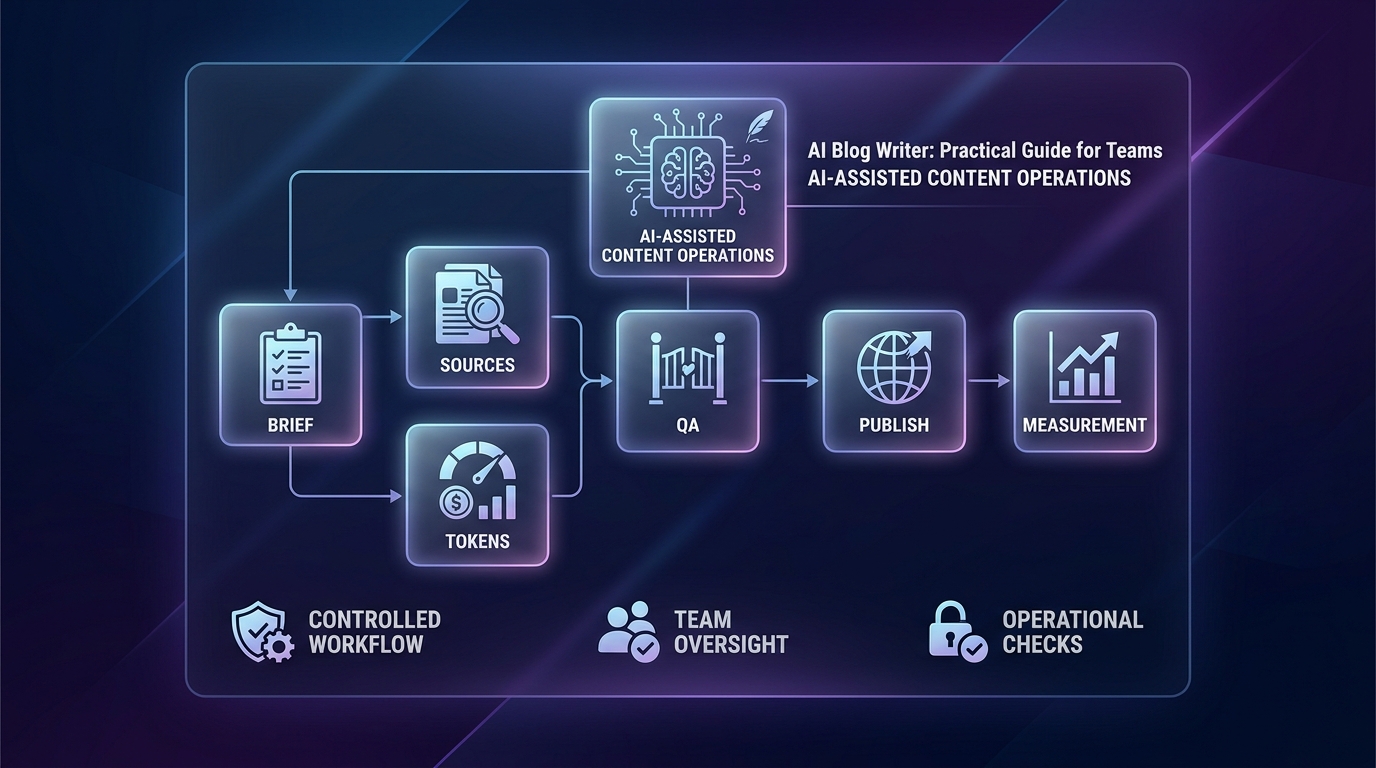
AI Blog Writer Implementation Guide for Teams
A practical AI blog writer rollout guide for teams: source packs, token budgets, staged prompts, editorial QA, publishing checks, localization, and measurement.
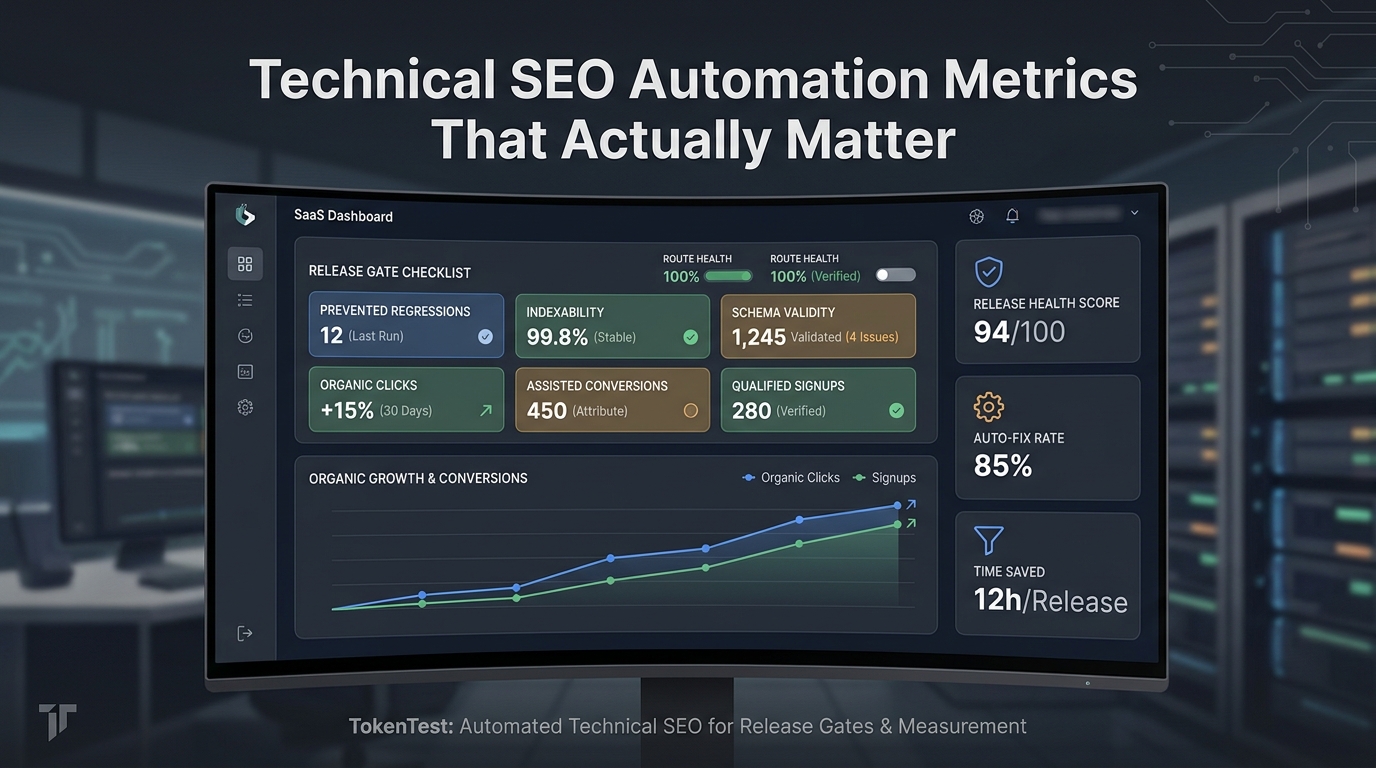
Technical SEO Automation Metrics That Actually Matter
A practical scorecard for measuring technical SEO automation by release protection, indexability, schema validity, workflow speed, organic clicks, qualified signups, and assisted conversions.

SEO Automation Use Cases by Funnel Stage: Controls, Handoffs, and Metrics
Map SEO automation use cases by funnel stage with controls, handoffs, review gates, and metrics for safer AI-assisted publishing.
Content Ops Metrics That Actually Matter
Use content ops metrics that actually matter to track organic clicks, indexed URLs, qualified signups, and assisted conversions instead of vanity counts.
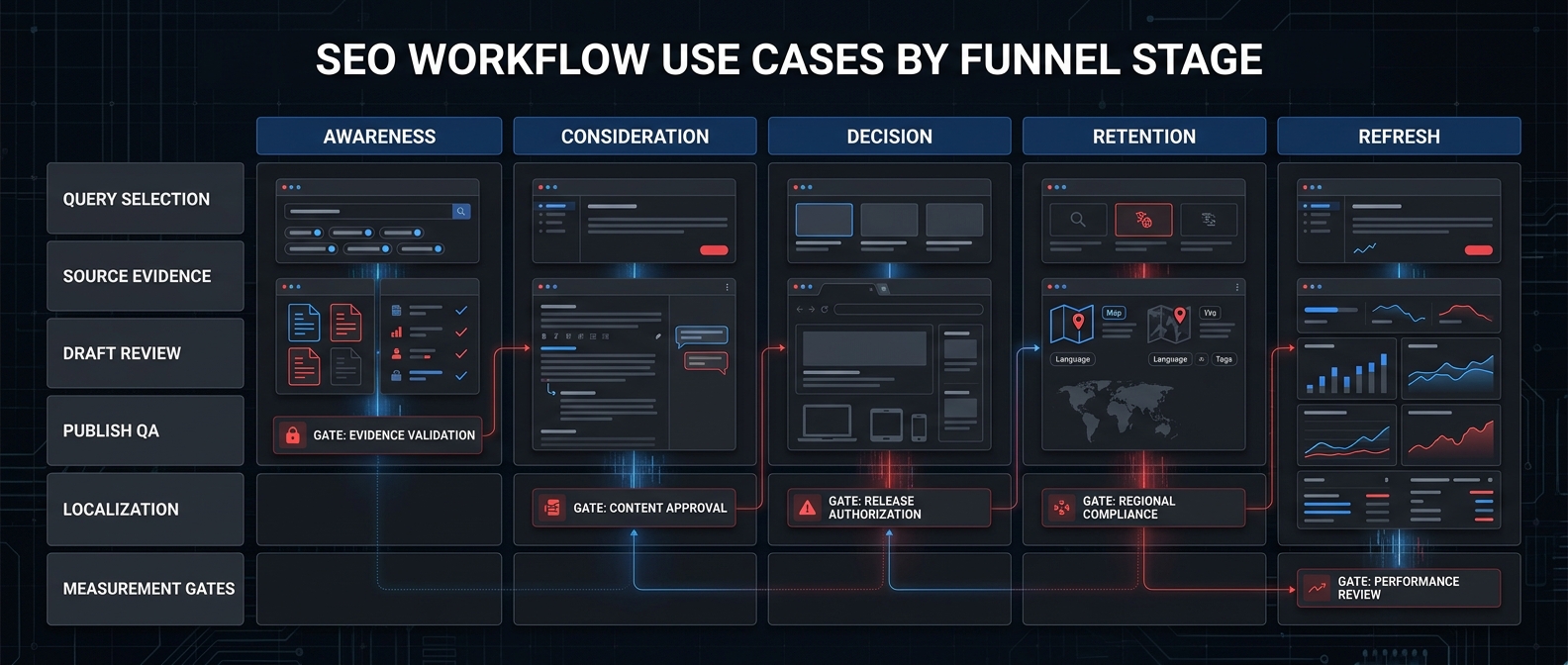
SEO Workflow Use Cases by Funnel Stage
Match the SEO workflow to the funnel stage: awareness, consideration, decision, retention, or refresh.

Keyword Research Automation Strategy for Growth Teams: Build the Decision Layer
Use keyword research automation to collect inputs, cluster intent, score opportunities, and route each cluster to create, refresh, merge, or ignore.

What Is Technical SEO Automation and When Does It Matter?
Learn what technical SEO automation is, when it matters, and how to gate crawl, index, schema, route, and measurement checks before publishing.

Content Planning AI Use Cases by Funnel Stage
Use content planning AI by funnel stage to map awareness, consideration, decision, and retention work, then gate every draft with proof, QA, and measurement.

SEO Agent Tools: Evaluation Framework
Use this SEO agent evaluation framework to compare source evidence, permissions, token budgets, CMS route checks, localization QA, measurement, and rollback.
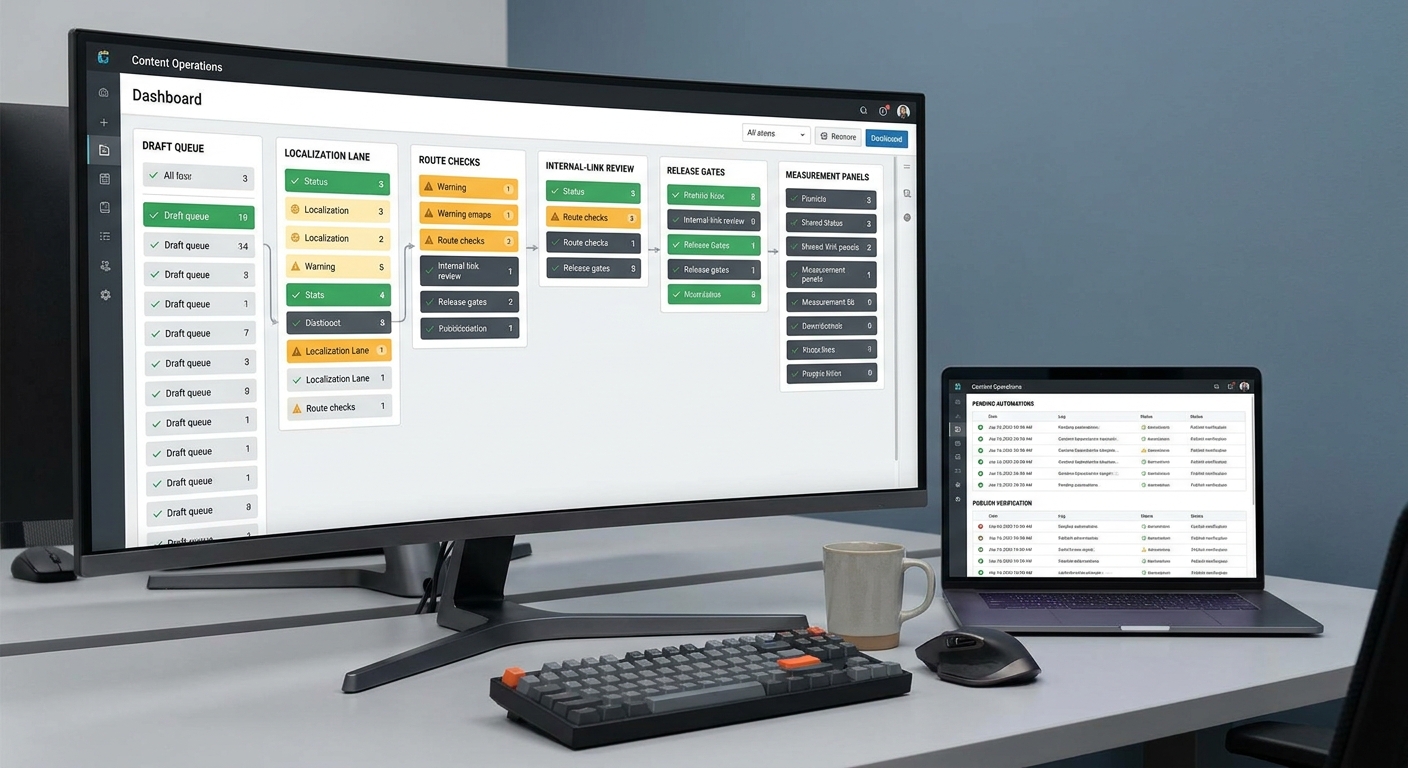
Blog Publishing Automation Strategy for Growth Teams
Use this blog publishing automation strategy to decide what to automate, what to keep manual, and which checks should gate publish decisions.
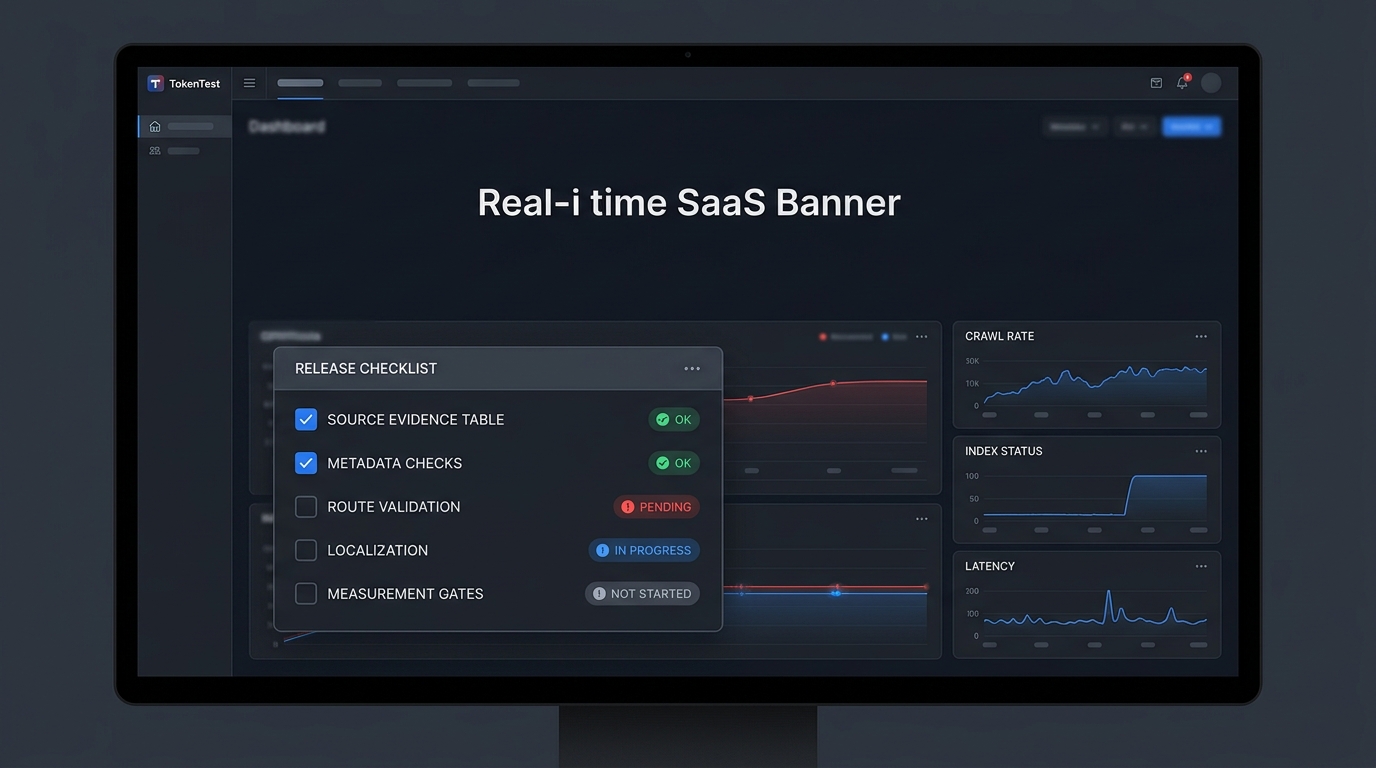
SEO Automation Checklist for Faster Decisions
Use an SEO automation checklist to choose the page, collect evidence, draft, publish, localize, and measure with clear release gates.
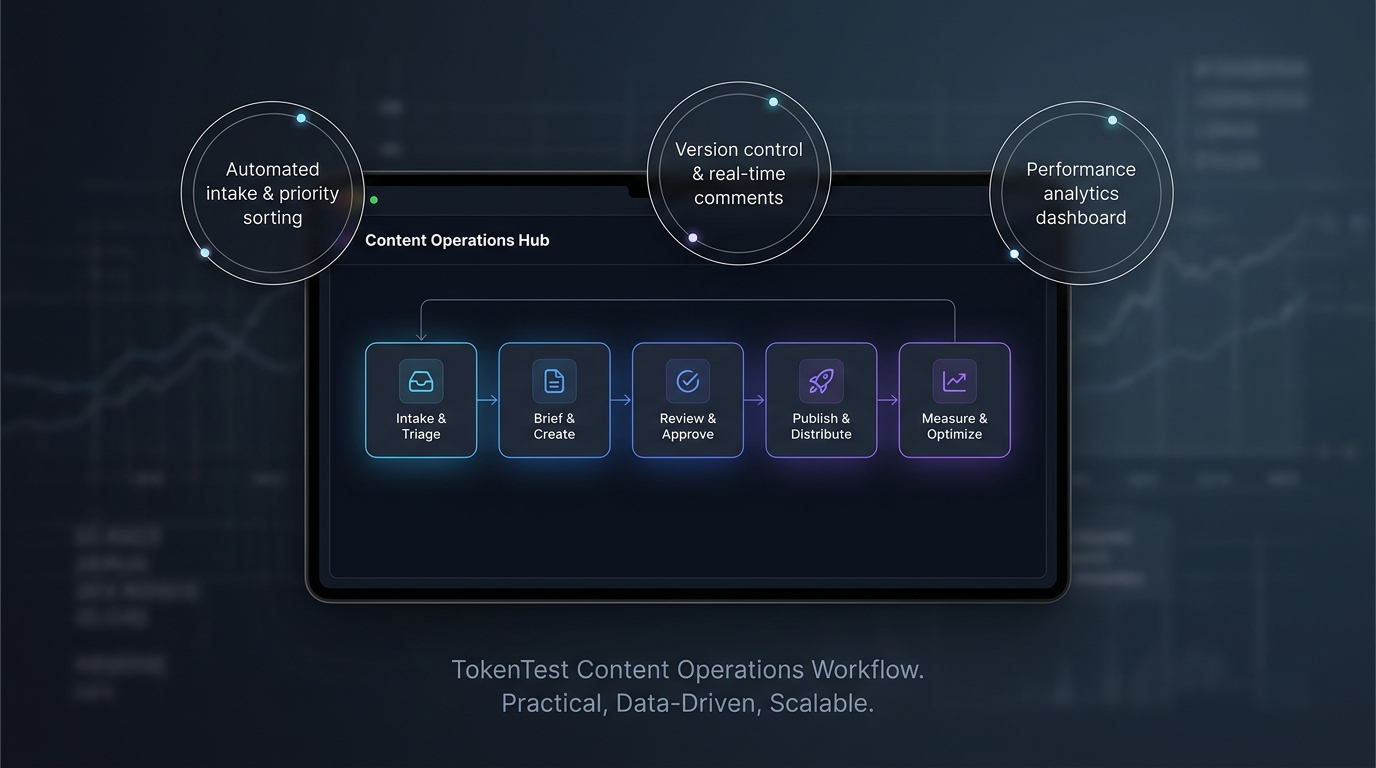
Content Ops for Teams: A Practical Workflow
Learn content ops for teams with a practical workflow for intake, briefs, review, publishing QA, localization, and measurement.
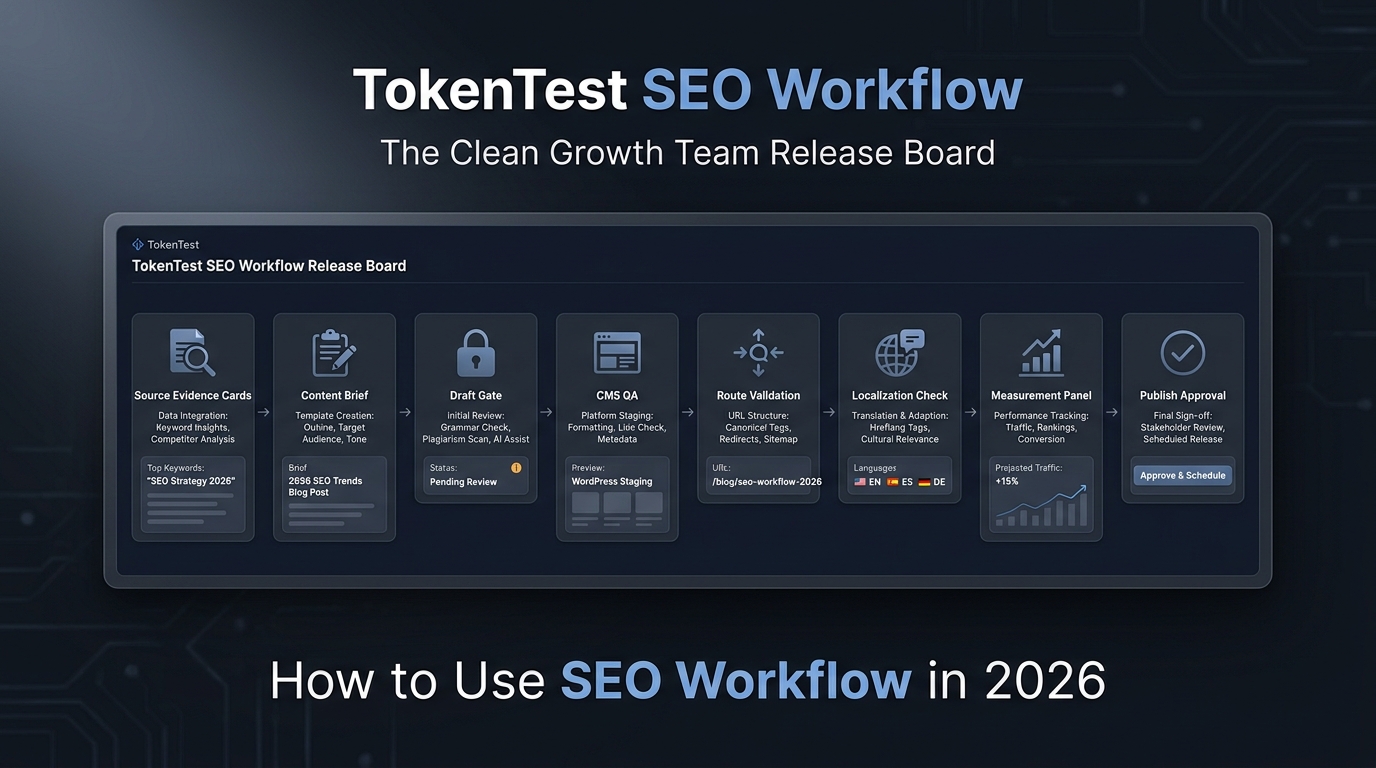
How to Use SEO Workflow in 2026
Use an SEO workflow in 2026 to choose the page, collect evidence, draft, publish, localize, and measure with clear release gates.
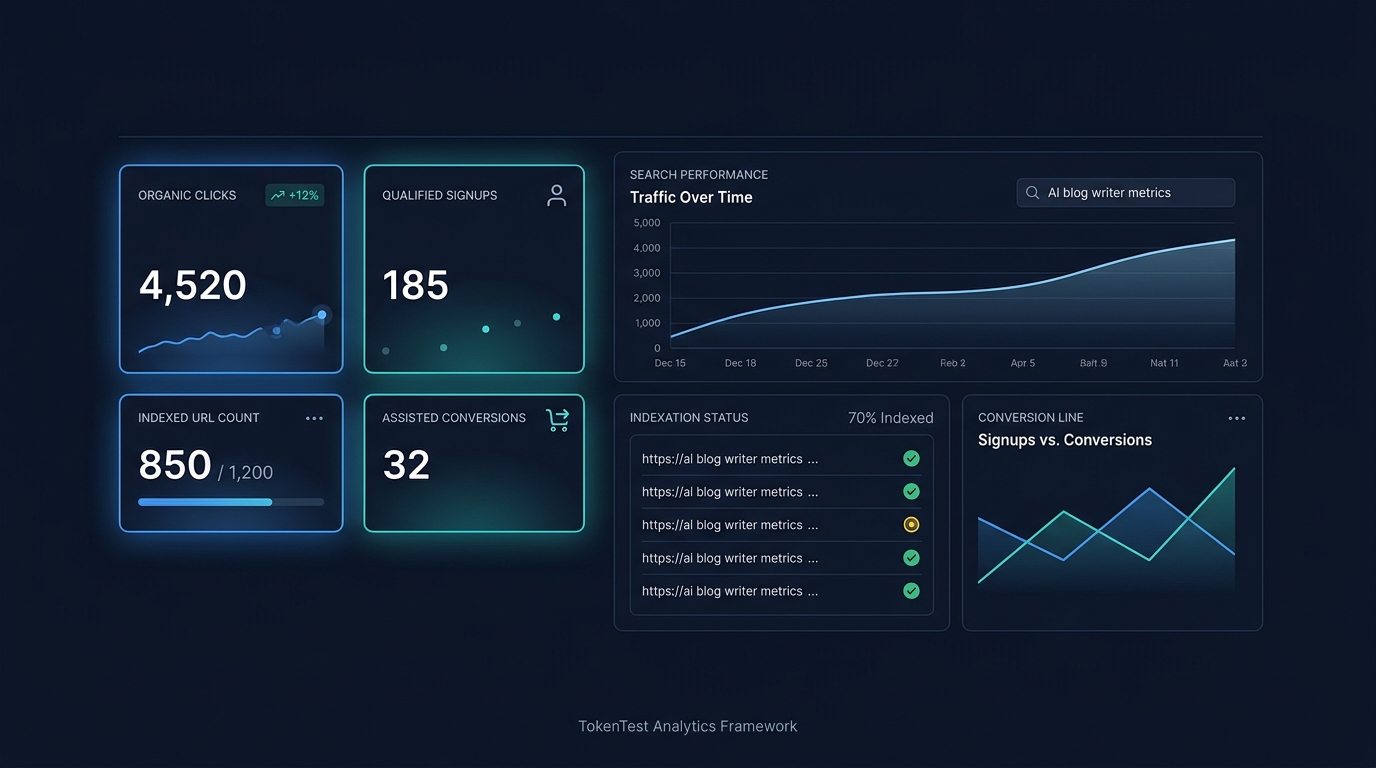
AI Blog Writer Metrics That Actually Matter
A practical measurement framework for AI blog writer content: track clicks, indexation, qualified signups, and assisted conversions, not draft volume.

Keyword Research Automation Use Cases by Funnel Stage
Map keyword research automation across TOFU, MOFU, BOFU, retention, and refresh work with review gates, scoring, and measurement.

Technical SEO Automation Tools: Evaluation Framework
Compare technical SEO automation tools by crawl evidence, indexability, schema, CMS fit, measurement, and release QA.
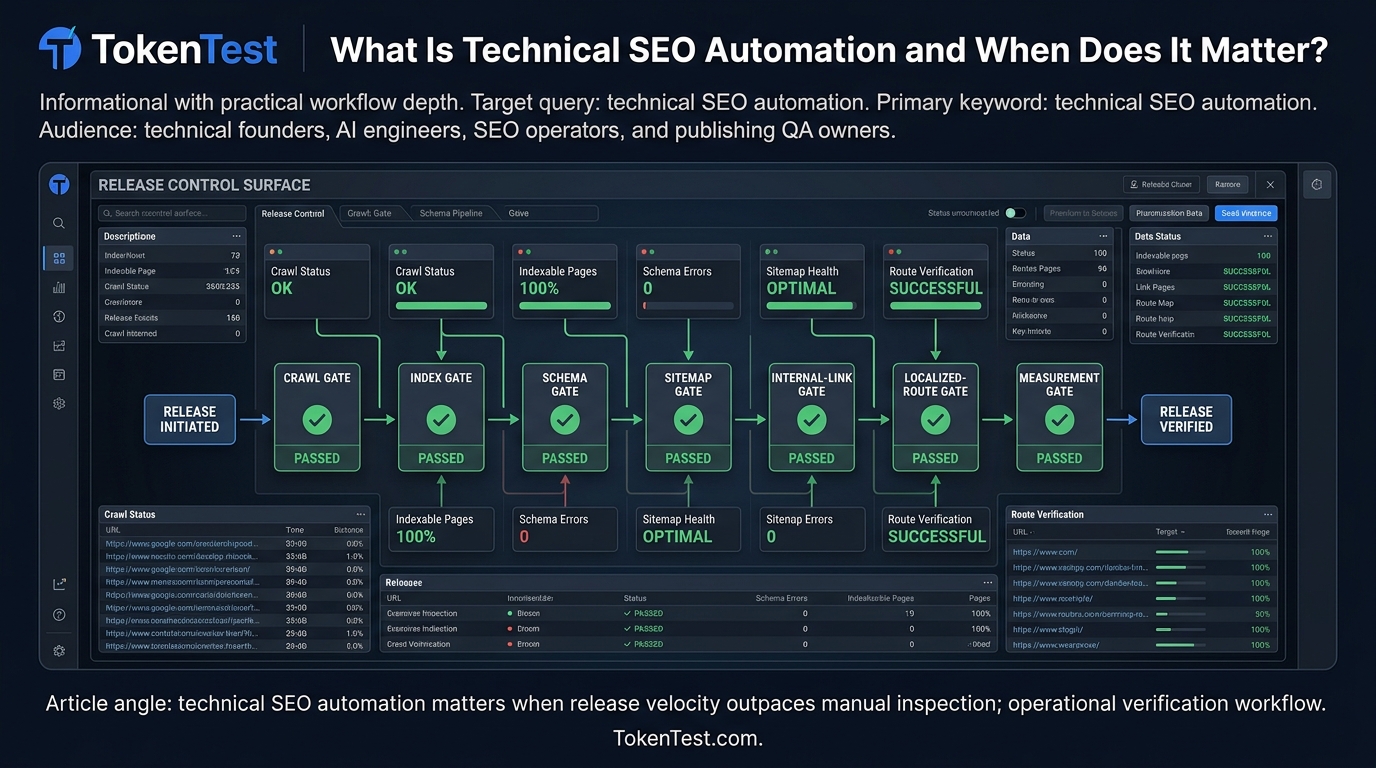
What Is Technical SEO Automation and When Does It Matter?
Learn what technical SEO automation is, where it helps, when manual review still matters, and how to build crawl, index, QA, and measurement gates.
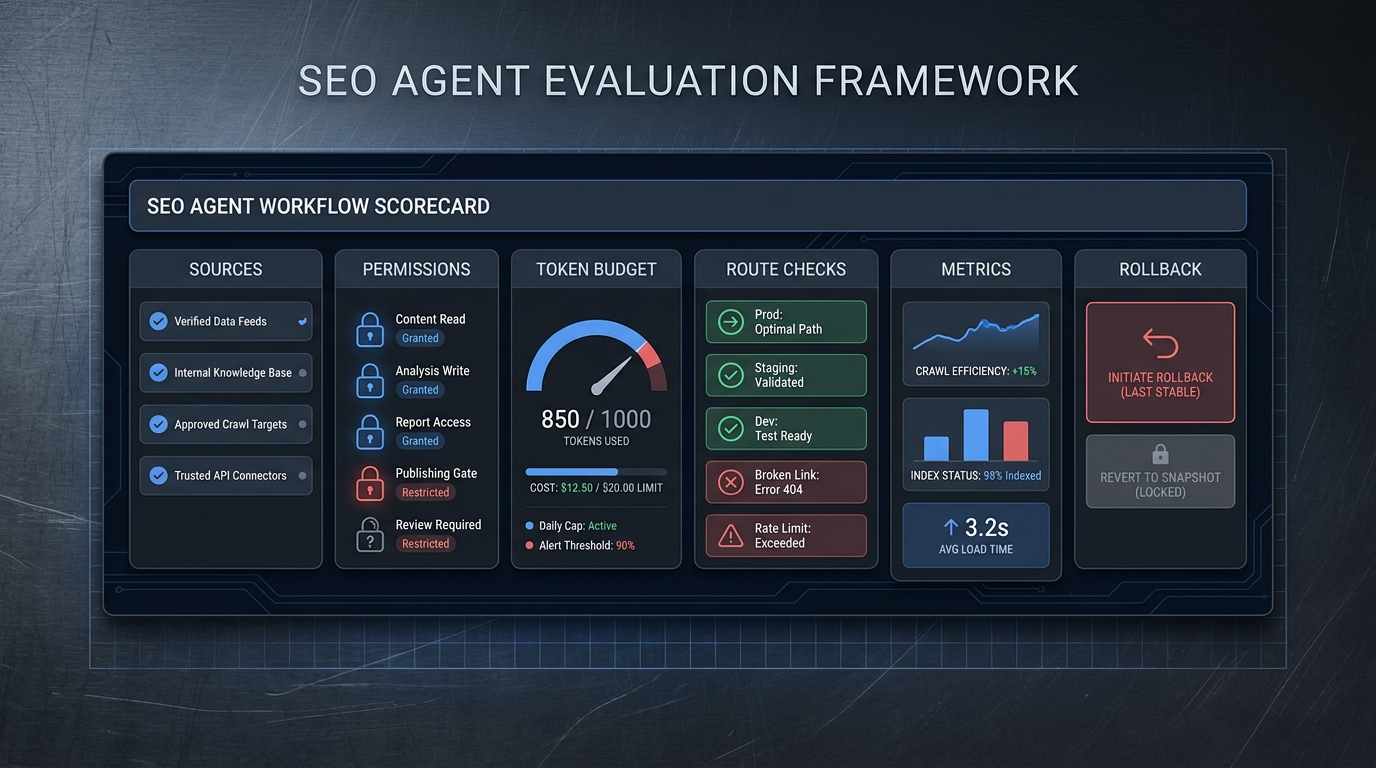
SEO Agent Tools: Evaluation Framework
Use this SEO agent evaluation framework to compare source evidence, permissions, token budgets, CMS route checks, localization QA, measurement, and rollback.
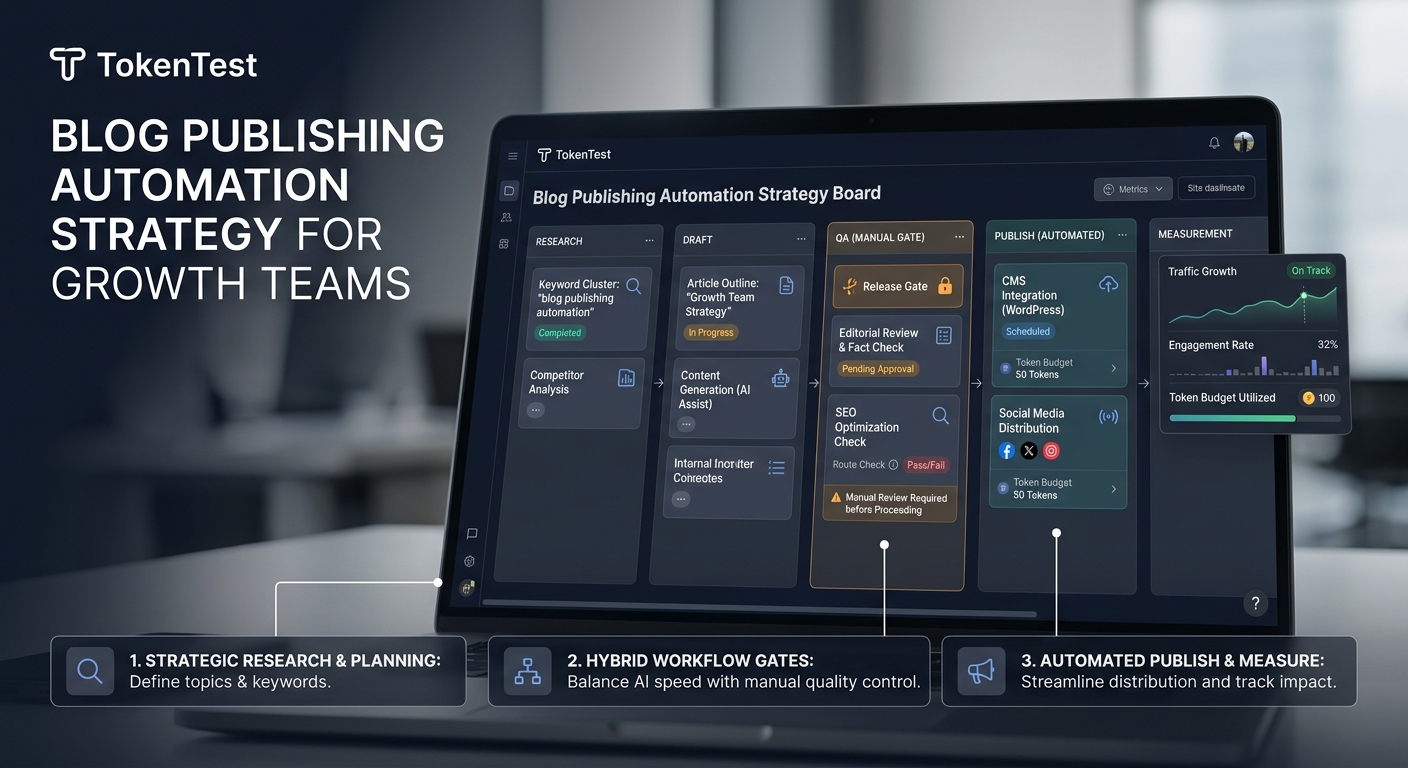
Blog Publishing Automation Strategy for Growth Teams
Use this blog publishing automation strategy to decide what to automate, what to keep manual, and which checks should gate publish decisions.

What Is an AI Blog Writer and When Does It Matter?
A practical guide to what an AI blog writer does, when it matters, and how to judge the workflow before you scale.